
In 2025-2026, Radnor Township School District is implementing new STEELS standards, which covers Science, Technology & Engineering, Environmental Literacy & Sustainability. These standards will impact how the Radnor Educational Foundation (REF) reviews and approves grant requests during the year.
Anna LaVine, REF’s marketing intern for the 2025 summer, interviewed Dr. James Kearney, the district’s Director of Curriculum and Instruction, to get more details.
Q: Can you give us a brief overview of what the new STEELS standards are?
A: STEELS standards are Pennsylvania’s updated science standards. They emphasize real world learning. One example of this standard is the focus on a phenomenon throughout the course. Additionally, the new standards emphasize an interconnectedness of different science concepts, like connecting engineering into a previous science lesson. The aim of the standards is for students to deeper engage and understand their lessons.
Q: What are the biggest opportunities that the STEELS standards present to the students’ learning experience at Radnor?
A: The biggest opportunity that the STEELS standards present to Radnor is a deeper understanding and engagement of the various science topics. The standards will work to make lessons more engaging, through hands-on activities and unique focuses.
 Q: What is the timeline for the full implementation of these standards?
A: Full implementation begins Fall 2025. This year’s state PSSA and Biology Keystone will incorporate the STEELS standards.
Q: How do you think the Radnor Educational Foundation (REF) will contribute to implementing these standards?
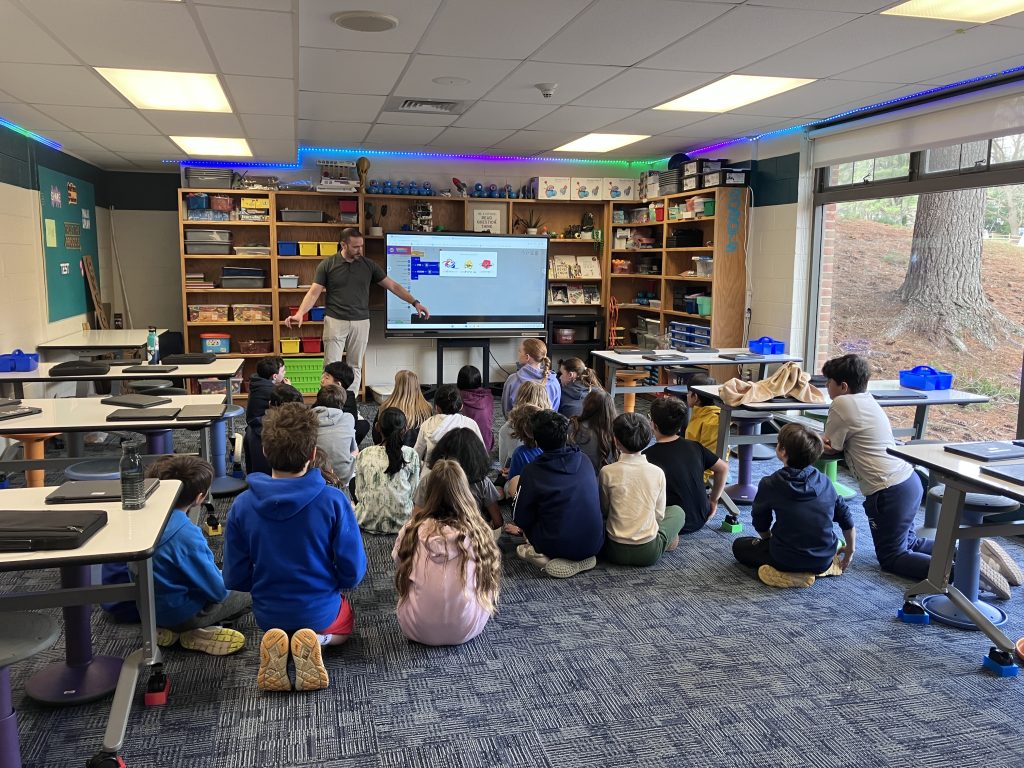
A: REF will contribute to these standards through the resources they can provide to the classroom. The contributions should be similar to their past ones, in providing the physical resource for learning, to allow students to learn uniquely. This year, REF provided the Innovation Design Studio (IDS) with drones for a project, and since this class will now meet twice in a rotation there will be a higher demand for similar contributions.
Q: Are there new outcomes in teaching caused by these new standards?
A: Yes. Teachers will now connect science with other disciplines, focus on real world phenomena, and have to make up new assessments incorporating these new lessons.
Q: What other classes besides core science classes do you expect to see these new standards being implemented in?
A: For K-5 there will be a new English Language Arts program, which has an aspect of knowledge building, specifically in the area of social studies and science. This science content will reinforce the standards that are prevalent in the science and IDS classrooms. In the middle and high schools, beyond the core science classes, the STEELS standards will mostly be prevalent in the technology and engineering classes.
Q: Do you have a specific example of how the STEELS standards will go deeper on a lesson than what was previously used in the classroom?
A: With the implementation of IDS, and the repetitiveness of the class, students will have a background in technology, and anything else they need to know for their future lessons. This foundation will allow students to perform more unique experiments and ultimately go deeper in lab experiments in their classrooms.
For K-5 questions, contact Dr. Scott Hand, Director of Technology Innovation and Instructional Design and Administrative Liaison to Policy Committee, at scott.hand@rtsd.org; for Grades 6-12, reach out to Dr. Kearney, Director of Curriculum and Instruction, Administrative Liaison to Government Relations and Communications Committee, at james.kearney@rtsd.org.